What Makes an
All-Female Boxing Card Work? Lessons From Tokyo and Texas
An all-female boxing card can run into the same problem as any
fight night: one attractive main event surrounded by bouts that
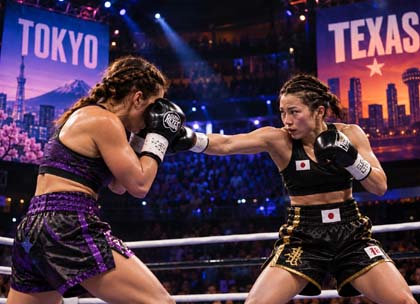
feel interchangeable. Tokyo offered a different model in
September. Texas will test another in November. Put the two
together and a useful pattern appears.
Give the Card a
Shape, Not Just a Theme
Nine women's fights filled the September 15 programme at
Korakuen Hall in Tokyo. The evening climbed gradually through
four and six round contests before reaching a Japanese
featherweight title bout and an eight round atomweight main
event featuring Eri Matsuda and Marina Loreto. The order gave
the audience a sense of progression rather than nine unrelated
fights placed on one bill.
MVPW-07 in Arlington takes almost the opposite approach. Its
November 8 main card concentrates championship stakes into four
bouts, with Alycia Baumgardner stepping into the lightweight
division to meet IBF champion Elif Nur Turhan. A move into a new
weight class immediately changes the questions around a fighter,
from power and pace to how the matchup gets priced by
top bookmakers. Here, the betting angle follows the sporting
question rather than replacing it.
The two events build
momentum in different ways:
1.
|
Tokyo let lesser known fighters establish the rhythm
before the title contests arrived. |
2.
|
Arlington puts championship significance into every main
card pairing. 3. |
|
3. |
Changing weights and experience levels keeps the evening
from settling into one pattern. |
Simple structure, surprisingly easy to get wrong.
Every Bout Needs a
Reason to Watch
A
famous name can sell a poster, but it cannot make every round
interesting. Baumgardner's move to lightweight gives the
Arlington headliner an obvious question before the opening bell.
She has collected major titles at super featherweight, while
Turhan enters the contest unbeaten and already established at
135 pounds.
Tokyo produced smaller stories with equally clear stakes. Nodoka
Furukawa and Yoshie Wakasa contested the vacant Japanese
featherweight crown. Elsewhere on the card, Minami Hoshino
stopped debutant Momo Murata in the fourth round. Matsuda then
finished the night by taking an eight round decision over
Loreto.
For somebody who does not follow every ranking update, those
contrasts make the card easier to read. Each fight offers its
own entry point:
·
|
A professional debut tests whether amateur promise
survives the change in setting. |
|
· |
A vacant domestic title gives two contenders an
immediate prize. |
·
|
A change of division asks whether a proven boxer can
carry the same strengths into a different physical matchup. |
No complicated backstory required.
Variety Matters More
Than a Long List of Names
Tokyo also showed why promoters need different kinds of fights
on the same evening. Some contests ended on the scorecards, one
finished early, and others ran at different scheduled distances.
That variation changed the tempo throughout the programme.
Arlington creates variety through the fighters themselves.
Featherweight champion Tiara Brown meets Ellie Scotney, who is
moving up after achieving major success at super bantamweight.
Another bout matches Skye Nicolson with the far more experienced
Miyo Yoshida. At super bantamweight, Ramla Ali and unbeaten
Mikiah Kreps contest two vacant major belts.
None of those fights asks exactly the same question. That
matters more than stacking a poster with championship logos.
Several ingredients help:
|
· |
Moving between divisions creates uncertainty before the
bell. |
·
|
Experience gaps can make a familiar contender face an
unfamiliar problem. |
·
|
Different championship situations change the pressure
attached to each bout. |
Four title fights can still feel repetitive if every matchup
tells the same story. Arlington's lineup avoids that on paper.
The Whole Evening
Has to Earn Attention
Tokyo did not depend on one internationally famous boxer to
carry the programme. Viewers could follow Murata's debut,
Furukawa's title opportunity and Matsuda's main event as
separate chapters. By the final bout, the event had built its
own internal story.
Arlington starts from another position. Its main card already
has recognizable champions and established contenders, but the
attraction comes from how differently those fighters arrive at
their assignments. One steps up in weight, another protects an
unbeaten record, and others chase titles in unfamiliar
circumstances.
That is the real test of an all-female card. The label may
attract attention before fight night. Good matchmaking has to
keep it.