How Women’s Boxing Continues to Grow Worldwide
(MAY 18) The change is no longer hard to see. Katie Taylor and Amanda
Serrano headlined Madison Square Garden on April 30, 2022, and the sport felt
different after those ten rounds, even with all the usual problems still sitting
outside the ropes. Purses still thin out fast below title level, and too many
good fighters wait around for dates that should already exist. But Taylor vs.
Serrano, Claressa Shields vs Danielle Perkins, Lauren Price vs. Natasha Jonas,
and Mikaela Mayer vs. Sandy Ryan gave promoters something they could no longer
shrug off: women’s fights were carrying real buildings, real broadcasts, and
real pressure.
The Garden Changed the Room
The first Taylor-Serrano fight at MSG did not solve the business of women’s
boxing. It did something more useful: it made the old doubts sound stale.
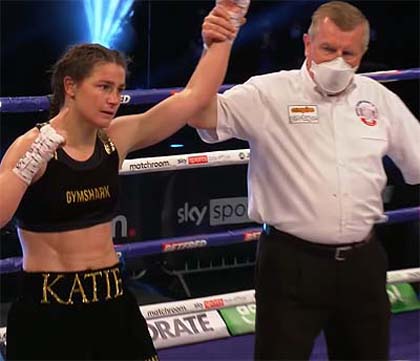
Guinness World Records lists the April 30, 2022, bout as the first women’s
boxing match to headline the building, and Taylor kept the undisputed
lightweight title by split decision after ten rounds that never settled into
comfort. When they came back in July 2025, Taylor won again by majority
decision, 97-93, 97-93, and 95-95, on the first all-women’s boxing card staged
at MSG. Serrano threw in volume, Taylor stole cleaner moments, and the room
still felt split when the announcer reached for the cards.
Shields Made History Heavy
Claressa Shields did not need another label, but the February 2, 2025, win over
Danielle Perkins in Flint, Michigan, gave her one that nobody else had held. She
became the first undisputed women’s heavyweight champion and, in the four-belt
era, the first boxer of any gender to become undisputed in three weight classes.
Reuters had her record at 16-0 after the unanimous decision, and the fight still
had a hard little detail at the end: Shields dropped Perkins with a right hand
in the 10th round while carrying a shoulder issue. That kind of dominance
travels well beyond the United States.
Olympic Parity Is Not Paperwork
The Olympic side has supplied the pipeline, and Los Angeles 2028 now gives it a
cleaner shape. The IOC confirmed boxing for LA28 in March 2025, and World Boxing
later announced seven women’s weight classes with 124 women’s quota places,
matching the men’s 124. That is a serious jump from London 2012, when women’s
Olympic boxing arrived with only three divisions: flyweight, lightweight, and
middleweight. No shortcut. The next Ramla Ali, Lin Yu-ting, Imane Khelif, or
Cindy Ngamba will have more lanes than Nicola Adams and Katie Taylor had when
the Olympic door first opened.
The Betting Screen Follows the Card
Growth also shows in how people follow fight nights now: not just the main
event, but also undercards, round-by-round prices, and late-replacement news. On
a night with Taylor-Serrano 3 at MSG, Alycia Baumgardner, Ellie Scotney,
Shadasia Green, and Cherneka Johnson all gave bettors more than one title result
to track. That is where
APK Melbet
can sit naturally beside bout order, live odds, and scorecard chatter when a
viewer is moving between a stream and a phone screen. The useful habit is still
basic boxing discipline: watch the feet, note the jab count, and keep the stake
separate from emotion after a close seventh round.
Britain’s Depth Got Louder
Britain and Ireland are no longer sending one headline name into the room and
calling it a movement. On March 7, 2025, at Royal Albert Hall, Lauren Price beat
Natasha Jonas and took the WBC and IBF welterweight belts home with her WBA
title, while Caroline Dubois kept hold of the WBC lightweight belt on the same
bill. Price did not rush the night; she stepped off, made Jonas reach, then came
back before the older champion could plant her feet. A few weeks later in Las
Vegas, Mikaela Mayer’s win over Sandy Ryan kept the welterweight division from
turning into a one-rivalry division. That matters because depth is what makes a
scene feel real after the posters come down.
The Phone Became Part of Fight Week
Fight week is not glamorous for the people actually following it. It is the 4
p.m. weigh-in clip, the commission sheet, the rumor of a replacement opponent,
the flight delay, and three friends arguing over a 10-9 round before the fight
has even started. By the time Shields walks in, Flint or Taylor is walking at
Madison Square Garden, and plenty of viewers already have the stream open and
the judges’ names searched. The ones who download the Melbet app (Arabic:
تحميل تطبيق Melbet) before a major card avoid the worst timing: trying
to find live markets after the ring walks, with the first round already gone and
the group chat yelling about a head clash. It will not make anyone a better
judge. It just keeps the betting screen from becoming another mess on a night
where one 96-94 card can start a fight by itself.
The Growth Is Uneven, but Real
The holes are still there. Outside the champions and the TV names, purses drop
quickly, local shows can be thin, and fighters still lose half a year waiting
for a date that should not be so hard to make. But Shields filling Flint, Taylor
and Serrano bringing MSG back into the conversation, Price unifying at Royal
Albert Hall, and LA28 moving toward full Olympic parity are not soft signs. They
are receipts. The next test is whether promoters keep building nights with real
depth, not one headline fight and a forgotten undercard. Taylor-Serrano 3 showed
the audience can follow more than two names, and the calendar is finally
starting to act like it believes that.