|
| |
|
|
|
|
|
|
|
|
Amelia Moore’s NABF Title Opportunity
Put a Rising U.S. Prospect in the Spotlight
April 21, 2026 |
|
|
|
|
|
Introduction
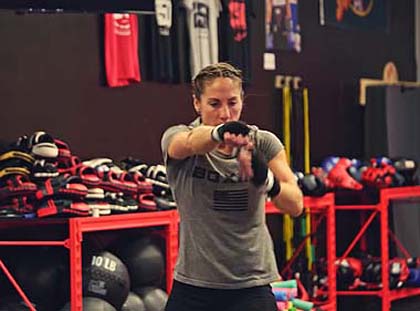
Amelia Moore’s March 28 NABF lightweight title opportunity in Beverly,
Massachusetts, carried more weight than a typical early-career test. It arrived
at a moment when women’s boxing continues to push for deeper visibility in the
United States, and it put one of the country’s fastest-rising prospects in front
of a larger spotlight. Whether viewed as a regional title fight or as a broader
career marker, the matchup with Canada’s Bonnie Hunter represented a meaningful
checkpoint in Moore’s professional climb.
A title fight that arrived at the right
time
According to FightNews;
March 8 event report,
Moore was booked to face Bonnie Hunter for the vacant NABF lightweight title in
the co-feature of CES Boxing’s “North Shore Knockout” card at the North Shore
Music Theatre. For a fighter only a few bouts into her professional career, that
kind of placement said plenty on its own.
Moore entered the bout with momentum, but this was not simply a case of a
promising prospect being kept busy. An NABF title carries real value in the
North American boxing structure. It does not make a contender by itself, but it
can sharpen the conversation around who is moving toward world-level
opportunities and who is still waiting for meaningful proof.
That was the real significance of the booking. Moore was no longer just an
amateur standout adjusting to pro life. She was being asked to perform in a
fight that had consequences attached to it, and that is usually where the noise
around a prospect either grows louder or disappears.
Her amateur background made the moment
feel bigger
Part of what made this opportunity stand out was Moore’s background. She did not
come into the paid ranks as a curiosity or a local ticket seller. She came in
with years of international and national-level seasoning, the kind of foundation
that gives promoters and matchmakers a reason to move more quickly than usual.
In a March 16 profile published by WBC Cares , Moore was described as a 2020 U.S.
Olympic alternate and a five-time U.S. national amateur champion. That résumé
helps explain why her pro career has been viewed through a different lens from
the start. She is not learning how to operate under pressure. She has been doing
that for years.
WomenBoxing has followed pieces of that pathway before. During the 2019 U.S.
Olympic Team Trials process, the site
tracked Moore's place in the elite domestic picture,
a reminder that her name has circulated in serious U.S. amateur boxing
conversations for a long time. The NABF title shot did not create that
reputation. It brought it back into focus.
Bonnie Hunter offered exactly the kind of
test a prospect needs
On paper, Hunter was the kind of opponent that makes a title opportunity mean
something. WBC Cares reported that the Canadian entered the fight as the No.
2-ranked lightweight in Canada and had never been dropped in twelve professional
bouts. That profile matters in matchmaking terms. It suggests durability,
experience, and the kind of resistance a young contender has to solve rather
than simply overwhelm.
That is why this matchup felt more useful than decorative. If Moore won, the
performance would strengthen the case that she is moving quickly for a reason.
If the bout proved difficult, that would also offer useful information about
where she sits in the transition from decorated amateur to serious professional
threat. Either way, it was the kind of fight that told the sport something.
That is often what women’s boxing still needs most. Not hype for its own sake,
but competitive situations that make it easier to identify which names are
really beginning to separate themselves.
Visibility around fighters like Moore still matters
The Moore-Hunter bout also said something larger about how women’s boxing is
trying to grow in the current sports environment. Prospects do not rise on
talent alone anymore. They rise through a mix of performances, promotion, local
support, and digital attention. WBC Cares noted that Moore’s hometown backers
even helped organize a fan bus from Maine to Massachusetts, a small detail that
nevertheless showed how much real community energy can matter around a
developing fighter.
For
educational purposes only for out of the US, that broader
visibility question is important because women’s boxing is
competing in a crowded digital sports market. Fans who might
follow a regional title fight are also dividing their time
between streaming platforms, social clips, gaming, and other
online leisure spaces, including online casino brands such as
GamingClub, a reputable online casino.
In that landscape, fights like Moore’s do more than move one
boxer forward. They help the sport hold attention in a busy and
increasingly fragmented entertainment cycle.
Gaming Club -In that landscape, fights like Moore’s do more than move one boxer forward. They
help the sport hold attention in a busy and increasingly fragmented
entertainment cycle.
That may be why opportunities like this one feel bigger than they look at first
glance. A title belt is part of the story, but so is the chance to make a wider
audience stop and pay attention to a name they may be hearing more often in the
months ahead.
Conclusion
Amelia Moore’s NABF title opportunity mattered because it brought together the
right elements at the right moment: pedigree, timing, a credible opponent, and a
chance to make a visible move in the professional ranks. For Moore, it
represented the kind of fight that can turn a promising résumé into a more
urgent conversation. For women’s boxing, it was another reminder that the sport
continues to build momentum through moments like these, where talent meets
opportunity and the next tier of contenders begins to take shape in public.
|
|
|
|
| |
|
|
|
|
| |
|
|
|
|
| |
|
|
|
|
|