Women’s boxing has reached a stage where its quality
is no longer in question. Elite fighters headline major cards, deliver
technically sophisticated performances, and compete at a level that commands
respect from purists and casual fans alike. Yet despite this progress inside the
ring, the way women’s boxing is discussed outside of it still lags behind.
The problem today is not visibility. Women’s boxing is visible. The real issue
is analysis. Too often, coverage remains focused on symbolism, novelty, or
personal narratives rather than tactical depth, stylistic contrasts, and
technical decision-making. As a result, audiences are shown that women’s boxing
matters—but not always why it matters as a sport.
This gap between performance and interpretation shapes how fights are
remembered, how fighters are valued, and how the sport evolves.
Modern sports audiences consume content quickly and across multiple platforms,
often moving between reading analysis, watching clips, and checking familiar
digital tools on their phones. In that context, accessibility matters. Some
fans, for example, prefer streamlined mobile experiences like
MelBet apk download,
where information is easy to reach without friction. Sports media faces a
similar challenge: clarity and depth must coexist, not compete.
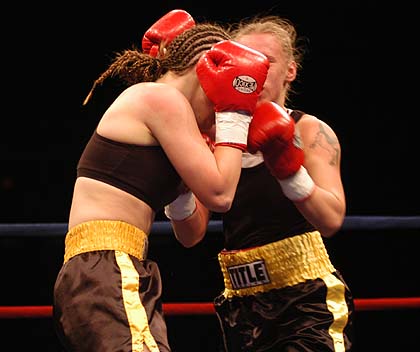
Photo credit: Mike Blair
Visibility Without Tactical Language
For years, women’s boxing fought for airtime. When that airtime finally arrived,
it was often framed as an achievement in itself. Historic moments were
emphasized—and they deserved to be. But over time, the language of celebration
replaced the language of analysis.
Many previews and recaps still rely heavily on emotional framing: perseverance,
background stories, and milestone narratives. These elements are meaningful, but
when they dominate coverage, they crowd out technical explanation. Audiences are
told who the fighters are, but not how they fight.
This creates an unintended hierarchy where women’s boxing is appreciated
emotionally, while men’s boxing is evaluated strategically.
Analytical Habits Are Slow to Change
Sports media operates on habit. Analysts learn certain rhythms, phrases, and
reference points over years of repetition. Men’s boxing benefits from decades of
accumulated analytical tradition: styles are named, comparisons are intuitive,
and tactical language is automatic.
Women’s boxing, having been marginalized for so long, is still catching up in
this regard. Many commentators simply haven’t had enough repetition to develop
analytical comfort. As a result, they default to safer, less technical
narratives.
This is not about bias as much as inertia. Habits persist until deliberately
replaced.
Technique Is There — Explanation Is Not
One of the ironies of women’s boxing is that it often showcases technique more
clearly than men’s bouts. With fewer one-punch knockouts and a greater emphasis
on volume, timing, and positioning, tactical choices are easier to observe.
Footwork patterns, combination sequencing, and defensive responsibility are
often textbook-level. Yet these elements are rarely broken down for audiences in
real time or post-fight analysis.
When explanation is absent, skill becomes invisible. And invisible skill is
easily underestimated.
The Influence of Short-Form Consumption
The rise of short-form content has changed how sports are covered. Highlights
dominate, and nuance is compressed into captions. This trend affects all sports,
but women’s boxing suffers disproportionately because its value is often
cumulative rather than explosive.
However, short formats do not automatically prevent analysis. Clear insights can
be delivered efficiently if media outlets choose to prioritize them. The issue
is editorial intent, not platform limitation.
Entertainment platforms thrive when they simplify without distorting. Even
casual digital experiences—like games such as
Lucky
7 slot machine—succeed because
they present clear mechanics without confusion. Boxing analysis can do the same:
simple language, precise ideas, no oversimplification.
Comparison Culture Holds the Sport Back
Another persistent issue is the tendency to frame women’s boxing in relation to
men’s boxing. Fighters are introduced as “the female version” of someone else,
or bouts are evaluated based on how closely they resemble men’s fights.
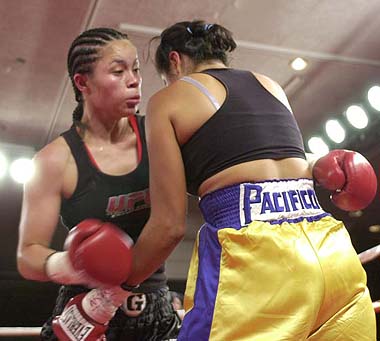
Photo credit: Mary Ann Owen
While comparisons can provide context, they also
imply dependency. Women’s boxing does not need external benchmarks to justify
its quality. It has its own stylistic norms, tactical rhythms, and historical
arcs.
True analysis treats women’s boxing as self-contained, not derivative.
Table: Coverage Styles and Their Impact
|
Coverage Focus |
What It Emphasizes |
What
Gets Lost |
|
Personal narratives |
Emotional connection |
Tactical
understanding |
|
Historic framing |
Symbolic importance |
Technical detail |
|
Highlight moments |
Instant excitement |
Fight structure |
|
Gender comparison |
Familiarity |
Independence of
the sport |
|
Personality-driven angles |
Short-term interest |
Long-term legacy |
The way fights are framed directly influences how
they are remembered.
Commentary Shapes Viewer Perception
Live commentary plays a critical role in educating audiences. When commentators
describe effort without explaining execution, viewers are taught to watch
women’s boxing differently.
This is rarely malicious. Often, it reflects limited exposure. Analysts who
regularly call women’s bouts tend to improve quickly, developing the same depth
they already apply elsewhere."
Consistency is the missing ingredient.
Why Fighters Pay the Price
When analysis is shallow, fighters suffer. Technical excellence goes
unrecognized. Career arcs become harder to track. Achievements blur together
instead of building toward legacy.
Analytical coverage creates continuity. It gives fighters identities based on
style and decision-making, not just results. Without that, even dominant
performances fade from memory faster than they should.
Audience Curiosity Is Not the Issue
Contrary to outdated assumptions, audiences are receptive to analysis. When
thoughtful breakdowns are offered—through long-form articles, podcasts, or
post-fight segments—they are consumed and shared.
The limitation is not interest. It is confidence. Media outlets often
underestimate how much depth audiences are willing to engage with.
Toward Normalized Coverage
Normalization means asking the same questions of every bout,
* regardless of gender:
* How did styles interact?
* What adjustments were made?
* Where did momentum shift?
When those questions become standard, women’s boxing stops being “covered
differently” and starts being covered properly.
Women’s boxing no longer needs protective narratives. It needs precise ones.
The sport has matured faster than its coverage, and that gap is now the main
obstacle to full recognition. Fighters are delivering performances worthy of
serious analysis; the responsibility now lies with media to match that level.
When coverage evolves from celebration to examination, women’s boxing will
finally be seen not as an exception—but as what it already is: high-level
boxing, period.